








“I'll launch next week.”
Not enough money.
Not enough time.
Too much competition.
Most people who want to start have the same list.
Chris Guillebeau went and met 1,500 entrepreneurs.
Every one of them started with less than $1,000.
Many with less than $100.
What he shares in The $100 Startup is almost frustratingly simple.
The problem was never a lack of means.
It's inertia.
Here's my summary of The $100 Startup, in 10 lessons.
At each exercise, take two minutes and do it.
It won't be perfect.
It will be done.

The $100 Startup: the summary in 60 seconds
The $100 Startup shows you can launch a profitable business with less than $100.
Start from a skill you already have and a need that already exists.
Sell consulting before you build a product, to a small group of beta testers.
Then grow with content and launches.
“What comes first, action or planning? Obviously, action wins.”
Lesson 1. Bootstrapping: your real enemy is inertia
▶ 02:20 in the videoAgainst inertia, Guillebeau has a method: “bootstrapping”.
Three rules, brutally simple:
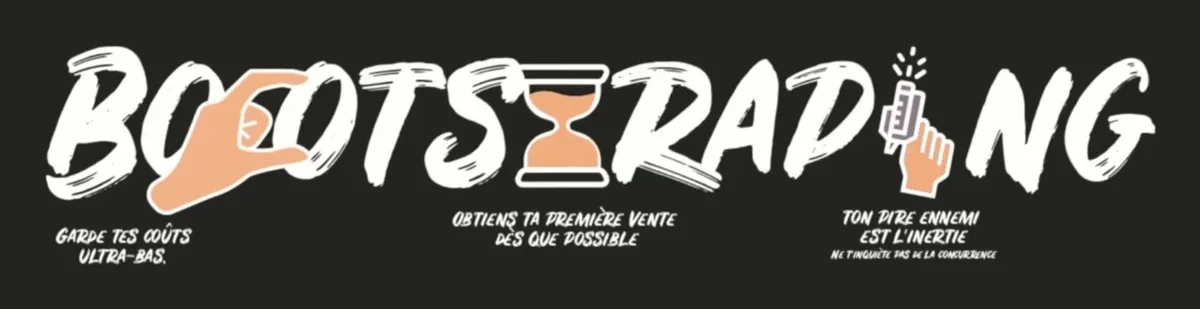
Ultra-low costs, a fast first sale, zero inertia.
- Keep your costs as low as possible.
- Make your first sale as early as possible.
- Forget the competition.
That's tomorrow's problem.
Today, it freezes you.
Most people do the opposite.
Months on the idea, the logo, a ten-page website.
Before the first client.
The ones who fail don't have a bad product.
They wait.
The first sale, even a small one, changes everything: it validates the offer and makes the project real.
Now you need to know what to sell.
Lesson 2. Your business idea is already inside you
▶ 02:40 in the videoYou don't need a revolutionary idea.Look for innovation.Look for usefulness.
The formula looks like a simplified ikigai: a passion or a skill you already have, a real need, and someone ready to pay.
The handyman who teaches DIY.
The cook who helps busy workers eat fast and well.
The organizing expert who helps people declutter.
The right question isn't “is my idea innovative?”.
It's: are other people already making a living from it?
If so, the market exists.
And it's bankable.
Produce.
A service built on what you already know how to do.
Identify.
People ready to pay, grouped by their interests, not their age.
Get paid.
A simple way to take payments: a PayPal account is enough to start.
Write your skill down somewhere.
You'll need it to write your mission.
Lesson 3. Charlatan, martyr or hustler: which one are you?
▶ 05:21 in the videoGuillebeau sorts entrepreneurs on two axes: talking, and producing.
Three profiles come out of it: the charlatan, the martyr and the hustler.
And you, today, where do you stand?
Stuck
You don't talk, you don't produce.
Inertia won.
The hustler doesn't have a gift.
He has three offers that cover every budget:
- Consulting: you do it with them.
“Done with you”. - Execution: you do it for them.
“Done for you”. - Training: they do it on their own.
“Do it yourself”.
To start: consulting.
Zero creation cost, and you test your offer against the market right away.
No hiding behind a product that's still under construction.
You still need to know what your clients want.
Lesson 4. What your clients really want (never what they say)
▶ 08:01 in the videoWe used to describe clients in numbers: 35, female, Paris, college degree.Age, city, income.Interests, values, passions.
A 25-year-old and a 55-year-old can have the same need.
And behind every request, the same desires: more time, more money, less stress.
“I want to learn to fish” might just hide the urge to be outside, away from the office.
“I want to lose weight” often hides self-confidence.
Never take the request at face value.
Reach out to 5 to 10 people.
Just one question:
“How can I
help you?”
Their words beat weeks of guessing what they need.
With them, you can write your mission.
Lesson 5. Your mission in 140 characters: the sentence that forces you to choose
▶ 14:05 in the videoNot a paragraph for investors.
One sentence, clear to someone outside your field.
140 characters max, following this template:
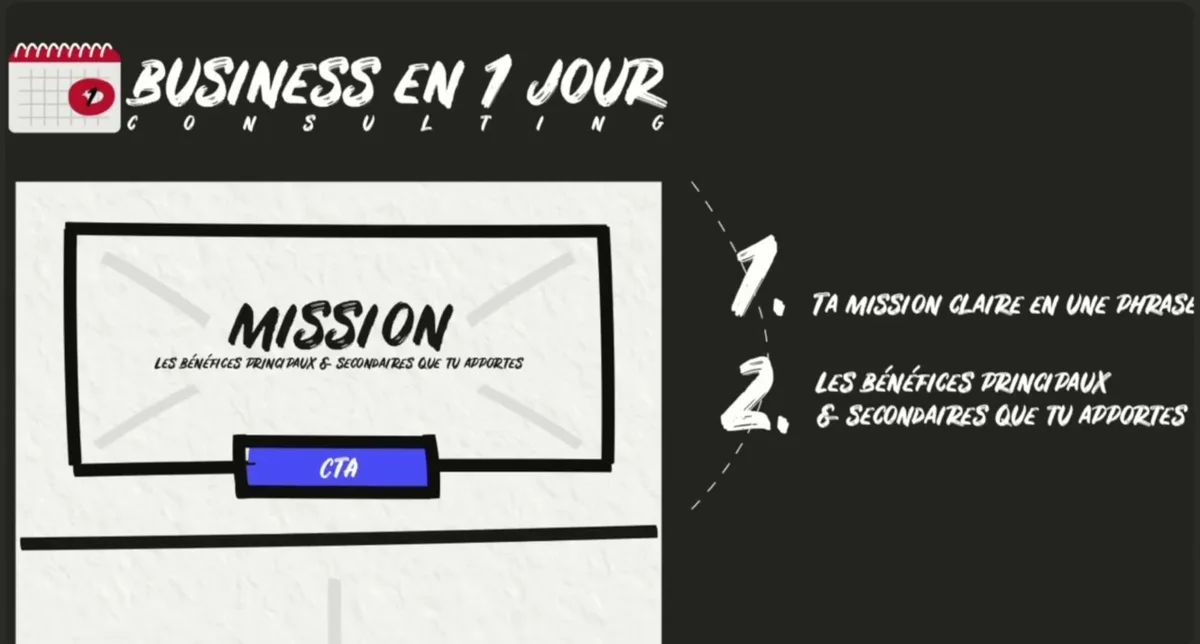
Then the benefits you bring, and a button.
We help [who] with [what] so they can [desire].
Remember the skill you wrote down earlier?
That's your [what].
Short, it becomes easy to recommend: a client can explain it to friends in thirty seconds.
The whole difference lies between what you do and what you change.
“I walk dogs.”
“What you do” describes a service.
“What you change” sells a transformation, and still fits in 140 characters.
Write yours now, even if it's not perfect.
Lesson 6. A logo won't pay your rent, an offer that sells will
▶ 12:40 in the videoA nice website.
A pro logo.
Likes.
Guillebeau calls them ego boosters, not business builders.
A business is a cash machine.
“The real question to ask yourself is how capable is your offer of generating revenue?”
Three principles to make it generate some:
- A price based on perceived value, not on your costs.
A luxury brand doesn't sell fabric.
It sells status. - Two or three options, no more.
The question shifts from “should I buy?” to “which one do I take?”. - Getting paid several times for the same thing.
Subscription, ongoing program, online course.
Recurring revenue changes the scale.
100 members at €20 a month is €2,000 a month.
1,000 members at €25 a month is €300,000 a year.
But before you cash in, check that your idea holds up.
Lesson 7. Seven questions to know if your idea deserves a shot
▶ 16:16 in the videoBefore a single page, before a single dollar of ads: seven filters.
Not to discourage you.
So you don't mistake enthusiasmvalidation.
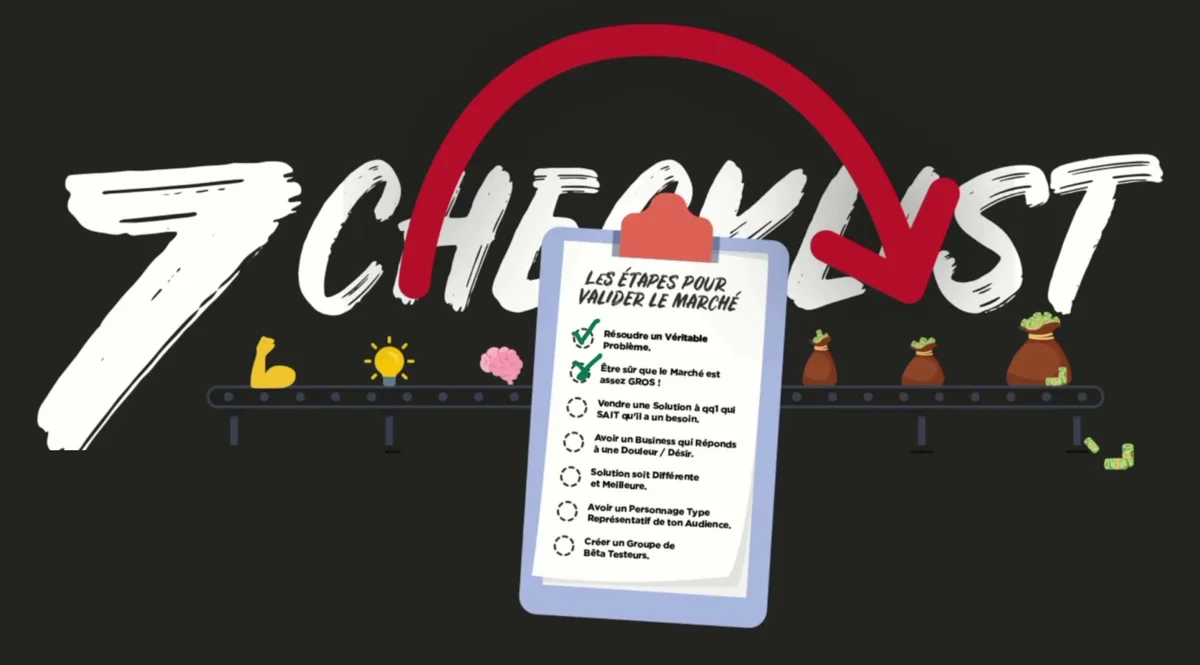
One box at a time.
- A real problem.
People talk about it and look for a solution. - A big enough market.
Check Google Trends.
Competition is a good sign. - A client who knows they have a need.
Go for the “low-hanging fruit”: present, don't convince. - A pain rather than a desire.
The purchase is more urgent. - A different, better solution.
Better targeted, clearer, simpler.
At first, slim margins are enough to make the difference. - An identifiable ideal client.
A real person, not an age bracket. - A group of beta testers.
A first version at a reduced price, for 5 to 10 clients.
Their feedback is worth more than any market study.
“Your goal won't be to convince. Your goal will simply be to present your offer to someone who knows they need you.”
Your idea passes all seven filters?
Time to put it on a page.
Lesson 8. Your business plan fits on one page, and it looks like a house
▶ 19:00 in the videoA 40-page business plan nobody rereads is useless.
Guillebeau fits it on one page.
I picture it as a house: one room per question.
Welcome to your business plan house.
What do you sell?
To whom?
How does it help people?
How much do you charge?
How do you get paid?
What other income streams?
How do your clients find you?
How do you encourage referrals?
How many clients and how much revenue this year?
Simple, but ambitious.
Your 2 or 3 specific obstacles.
And a solution for each one.
Turning it into a space helps you remember.
You now have a clear vision: what, for whom, how much, how.
Now comes the hardest part.
Lesson 9. Your first sale will be the hardest: here's how not to blow it
▶ 20:41 in the videoGuillebeau doesn't sugarcoat it: the first sale is the hardest.
His answer: a launch offer, in small quantities, at a reduced price.
Your first clients are your beta testers.
Happy, they become your first ambassadors.
To move fast, a single page, built in one day:
- Your mission at the top.
- Two or three benefits.
- Your past results, even ones you got for free.
- A clear offer, with its price and everything it includes.
- Booking.
No ten-page website.
No five-step funnel.
One all-in-one tool for the page and the calendar, and you're up and running.
Lesson 10. Content means cloning yourself for free
▶ 23:20 in the videoFirst sale done.
How do you grow without working twice as hard?
Guillebeau's answer: content.
Almost free, scalable, it prospects for you and builds your authority.
Your video works while you sleep.
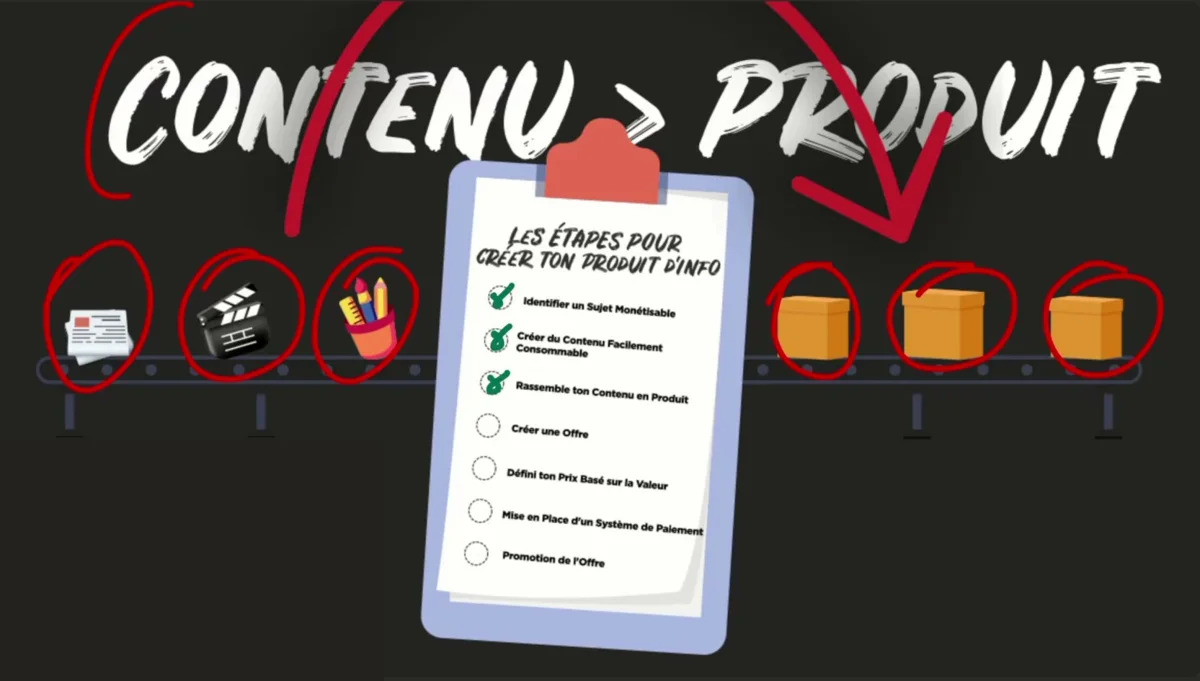
What you already publish, you can sell.
- Every day.
1 to 3 pieces of content, and 1 or 2 numbers tracked: visits to your page, calls booked. - Every week.
You keep the pace, you do collaborations. - Every month.
You ask your clients what you can improve. - Every now and then.
The launch.
A launch plays out in three stages.
Before: you announce you're preparing something.
During: you open, for a limited time with limited spots.
After: you turn your content into a course, sold on autopilot.
People happily pay for content they got for free, if it's better organized.
That's where your three offers come together.
For the move from consulting to courses: why selling courses alone doesn't work anymore.
Frequently asked questions about The $100 Startup
What is the book The $100 Startup about?
Chris Guillebeau shares what he learned from 1,500 entrepreneurs who started their business with less than $1,000, often less than $100.
The book has three parts: a model anyone can use, taking action up to the first sale, then the growth levers, especially content.
Can you really start a business with $100?
Yes, if you sell consulting first.
It needs no inventory and no product to build: your skill, a page, a calendar and a way to take payments are enough.
The book recommends keeping costs as low as possible and making your first sale as early as possible, to a small group of beta testers.
What are a charlatan, a martyr and a hustler?
They're the book's three entrepreneur profiles, sorted on two axes: talking and producing.
The charlatan talks without producing.
The martyr produces without communicating.
The hustler does both: he creates, communicates and sells, with three complementary offers.
How do you write your business mission?
In one sentence of 140 characters max, following the template: “We help [who] with [what] so they can [desire]”.
Describe what you change in your client's life, not what you do.
“I help busy owners keep their pets happy” beats “I walk dogs”.
What is the one-page business plan?
It's the book's plan boiled down to the essentials: what you sell and to whom, how you get paid, how clients find you, your goals for the year and your 2 or 3 obstacles.
I picture it as a house: the living room, the garden, the kitchen, the bedrooms and the toys lying around.
If you remember only one thing
An imperfect product that sells beats a perfect product that waits.
Planning or action?
Action always wins.